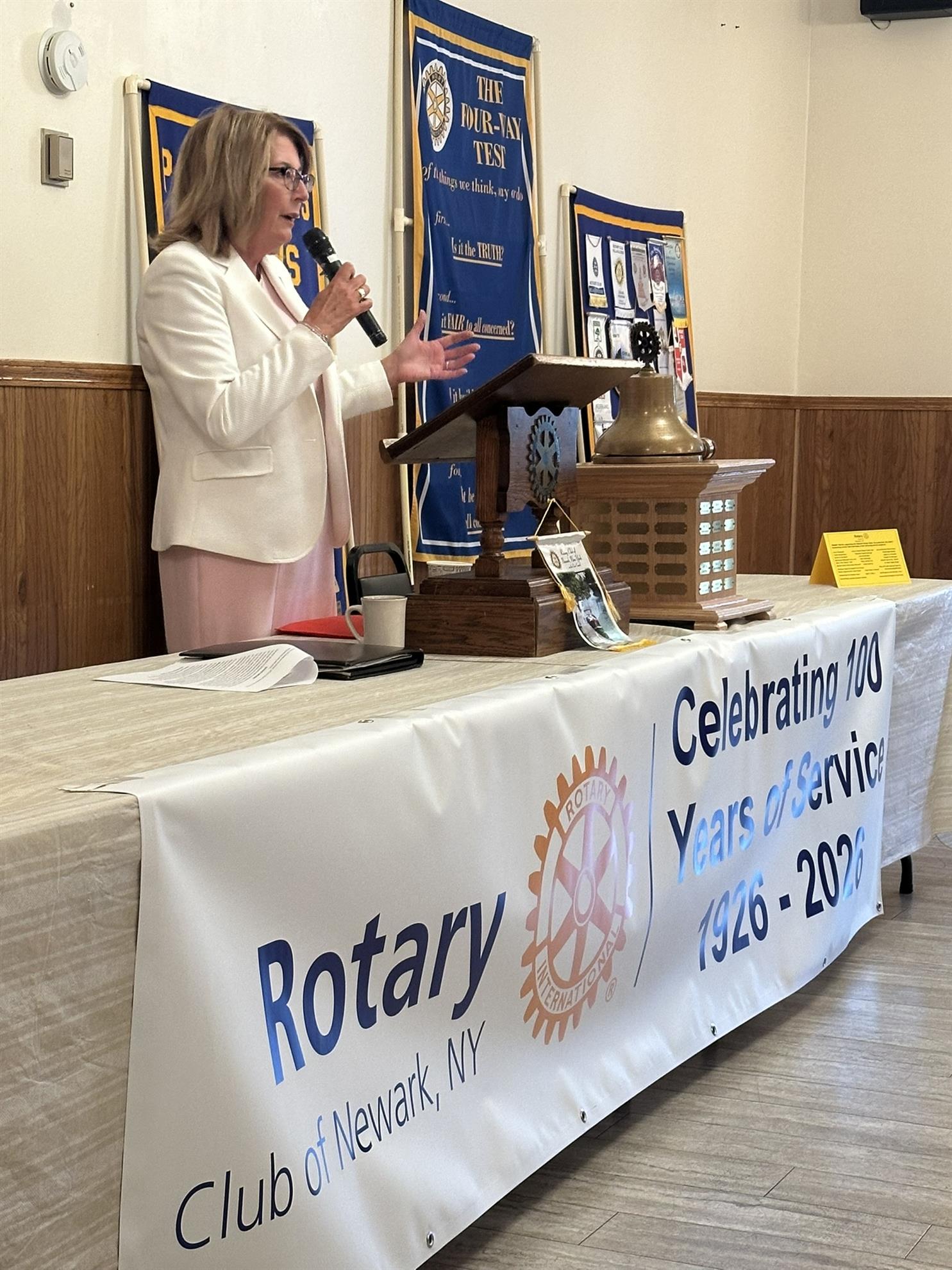
July was a busy month. State Senator Pam Helmings spoke to our club on July 6th.
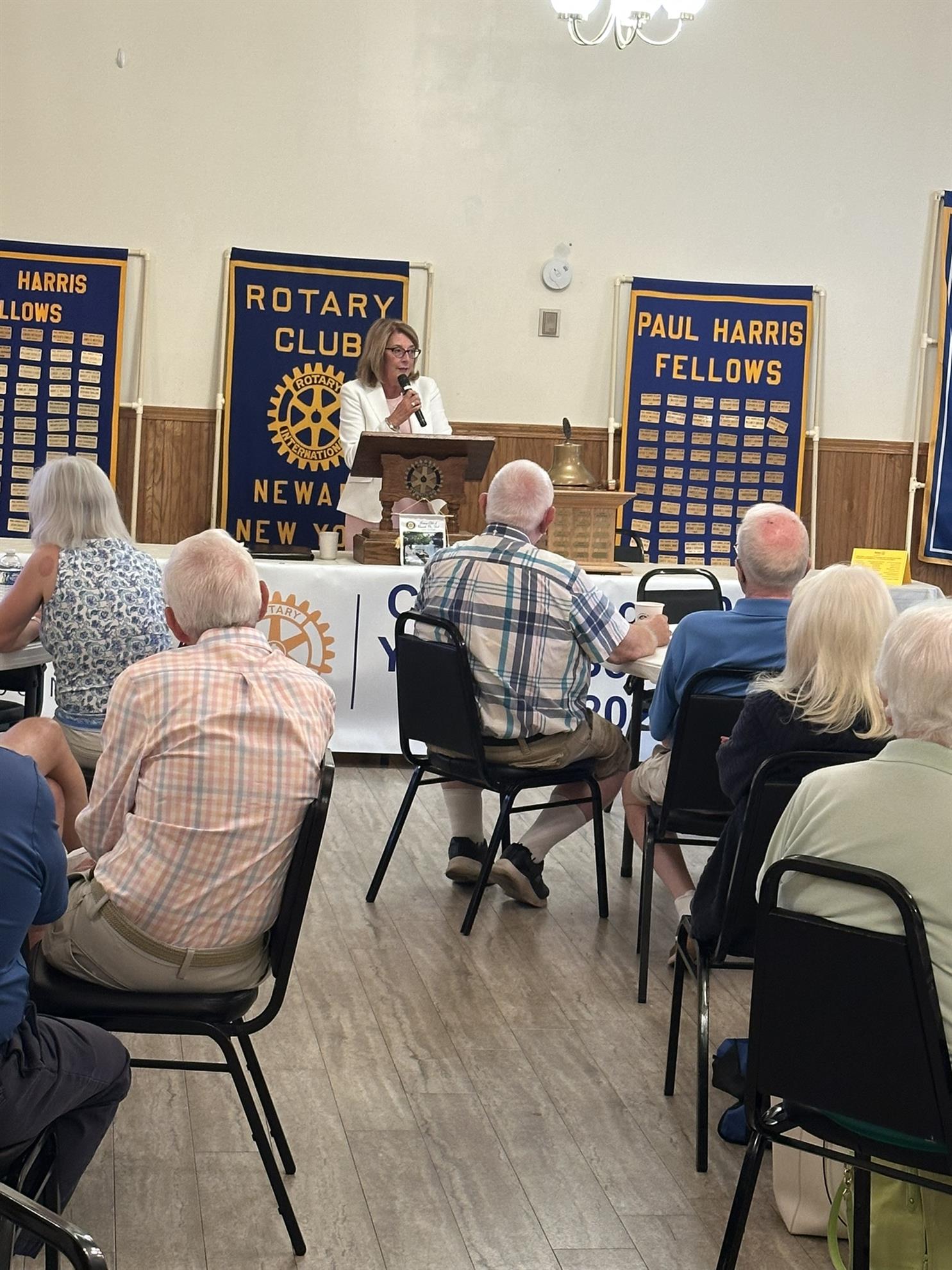
Senator Pam Helming addressed key regional and state issues, beginning with the skilled workforce development program and the closure of the Newark hospital birthing center. She noted that New York is the most heavily regulated state in the nation and advocated for increased incentives for volunteer firefighters and ambulance workers. Turning to legislative matters, she highlighted that the Protect Act—a bail reform proposal—failed along party lines, while the newly passed (and delayed) state budget has doubled in size over the last decade.
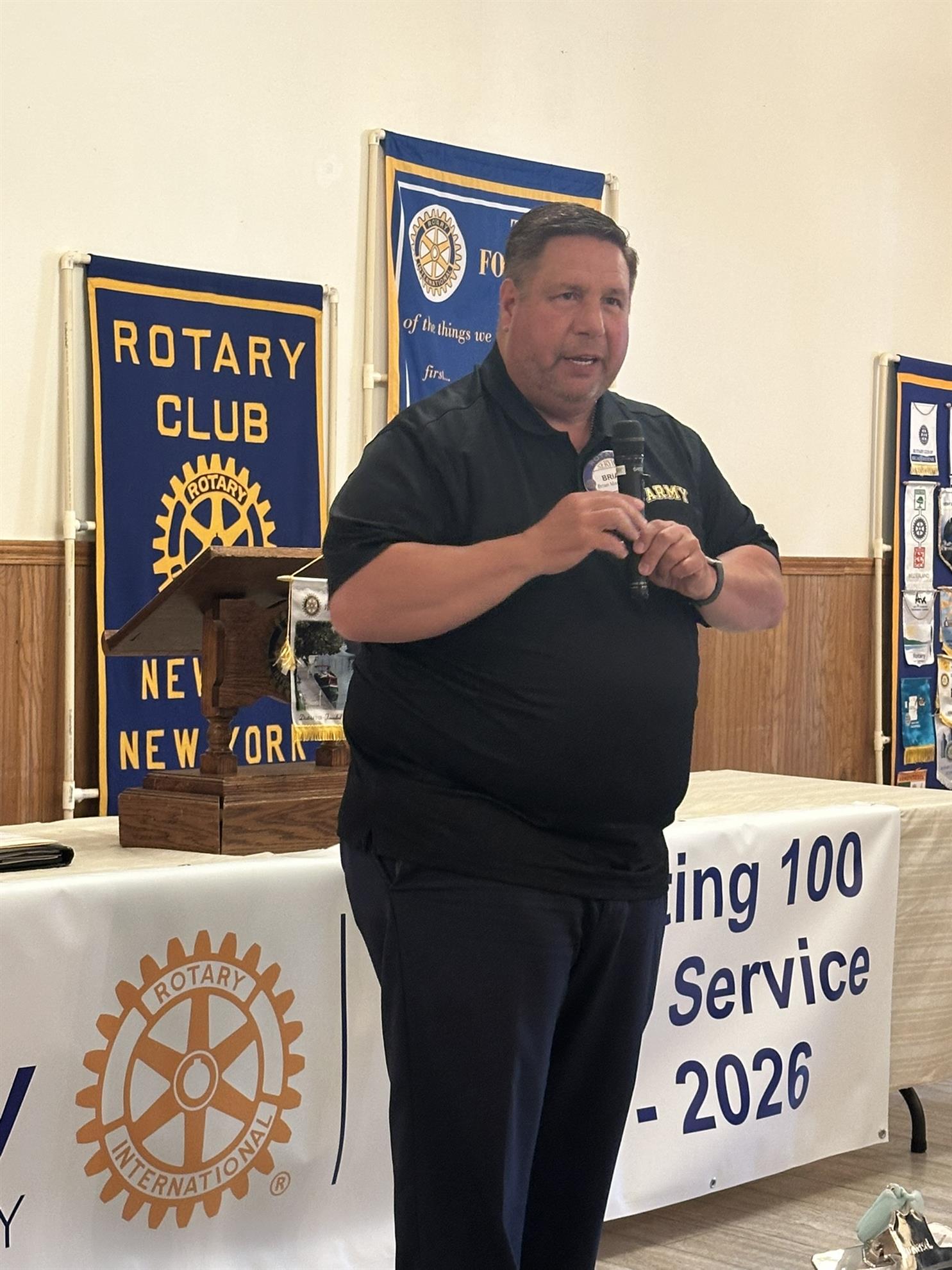
On July 9th, Newark Rotarian Brian Manktelow offered a glimpse into a day in the life of an assemblyman, describing a routine that spans quiet personal time in the morning, meetings with lobbyists during the day, time with the legislature or committee work, and evening receptions. As a member of the minority party, he emphasized the importance of cross-party collaboration to pass legislation—pointing to his work with Democrats on a bill addressing veteran suicide as a key example. He then wrapped up the session by taking questions from the audience.
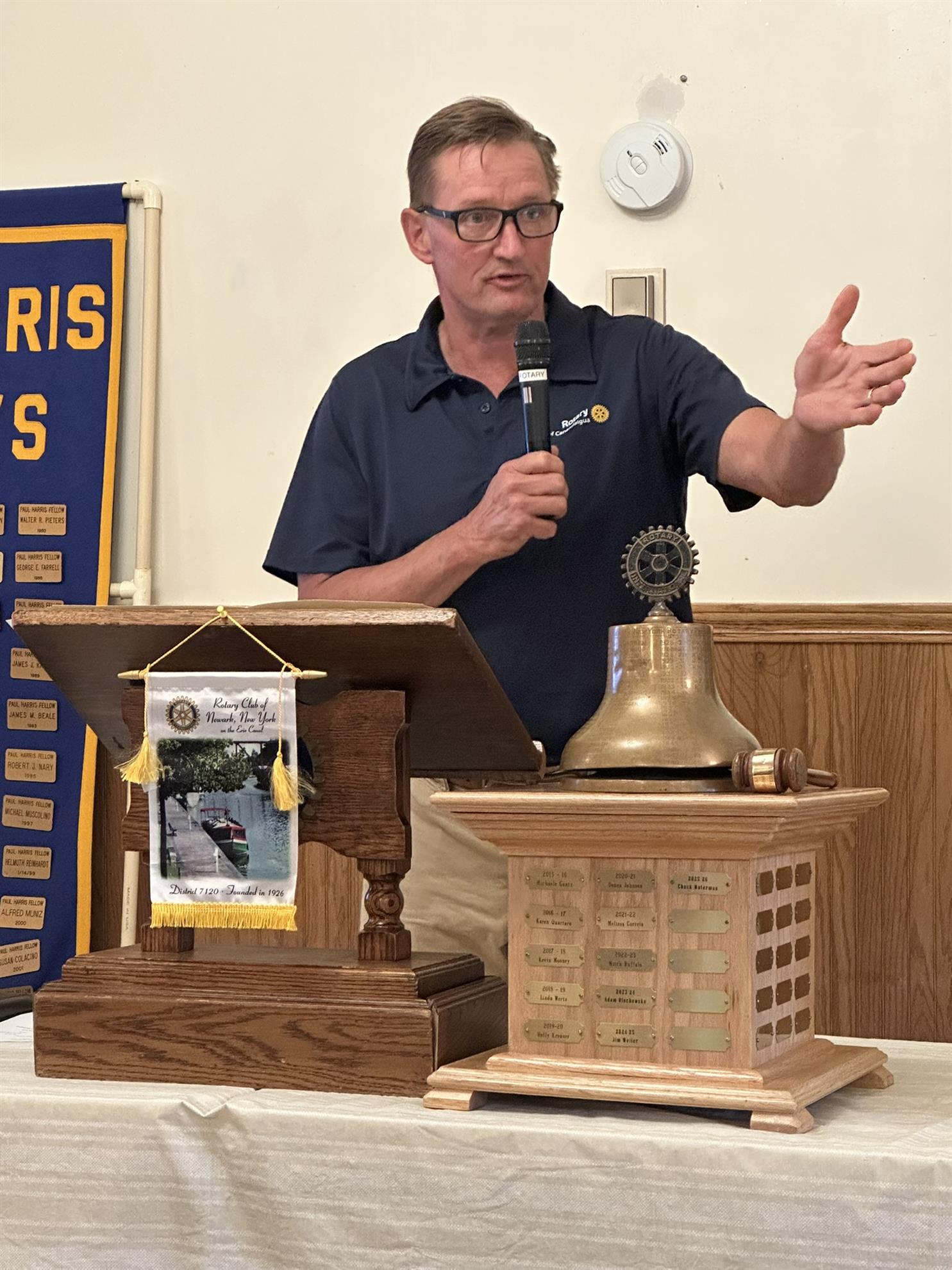
Kent Gilges and Mary Green, from the Canandaigua Rotary Club, highlighted a growing nutrition crisis in Uganda. Although the country is often considered the breadbasket of Africa, poor dietary diversity means that roughly 33% of deaths are linked to malnutrition—with diets relying heavily on staples like matooke, chapati, posho, beans, and chicken. To address this, Rotary is funding a new "train-the-trainers" initiative, adapting a successful community health model from Rwanda.
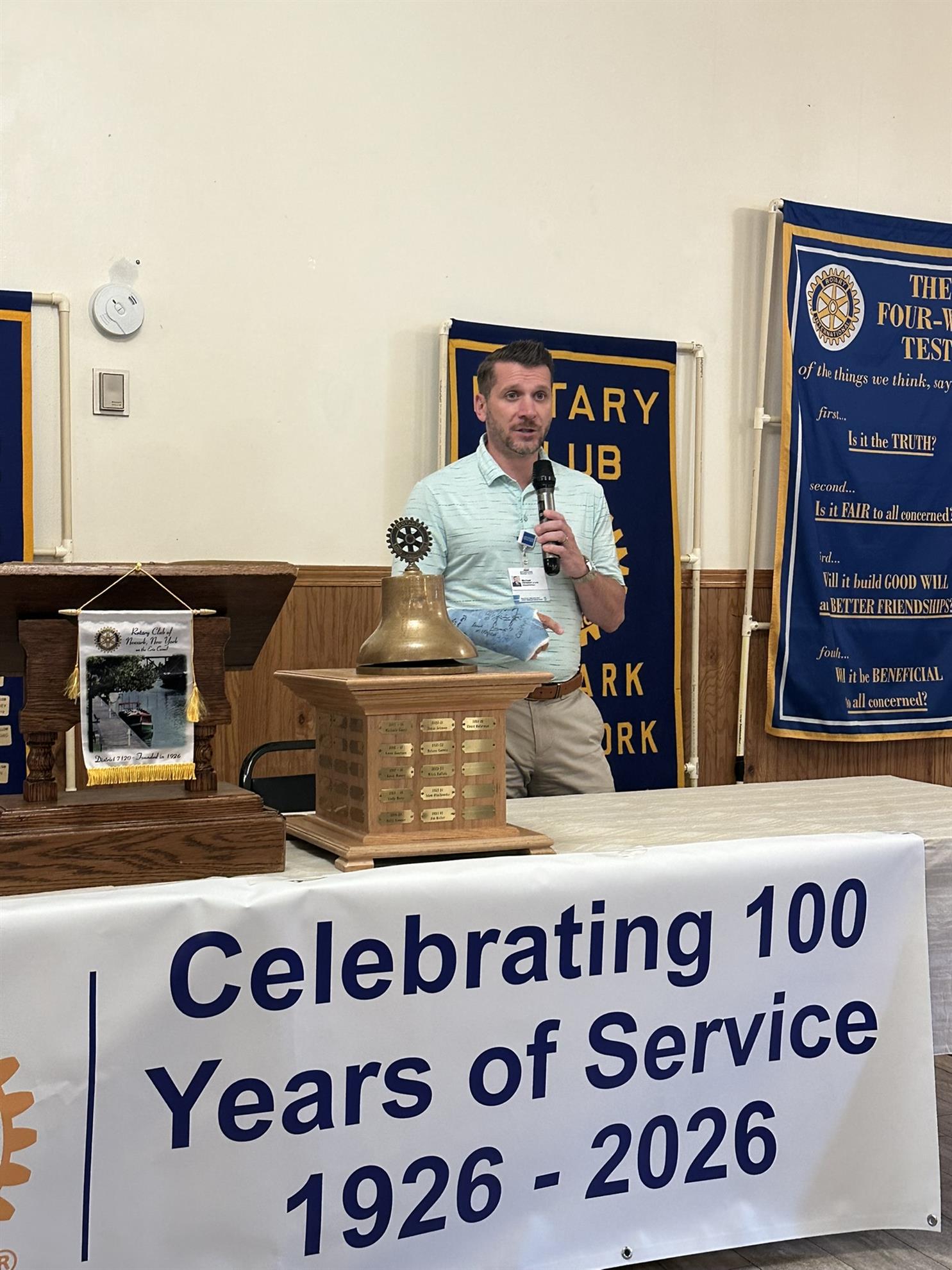
Newark and Clifton Springs hospitals President Mike Gilges opened his presentation by reassuring attendees that the Newark hospital is not closing. Having driven recent operational efficiencies, he expressed confidence that the facility is turning a corner. The hospital is actively preparing for major demographic shifts, notably a projected 40% increase in residents aged 65 and older by 2040, which is already driving up the average length of patient stays. Conversely, the local population of women of childbearing age is expected to drop from 14% to 7%. This shift—combined with a two-year struggle to recruit a full-time OB physician in an era where new doctors prefer non-rural specialization—has severely impacted maternity services, with annual deliveries falling from over 700 a decade ago to fewer than 400 in 2025.
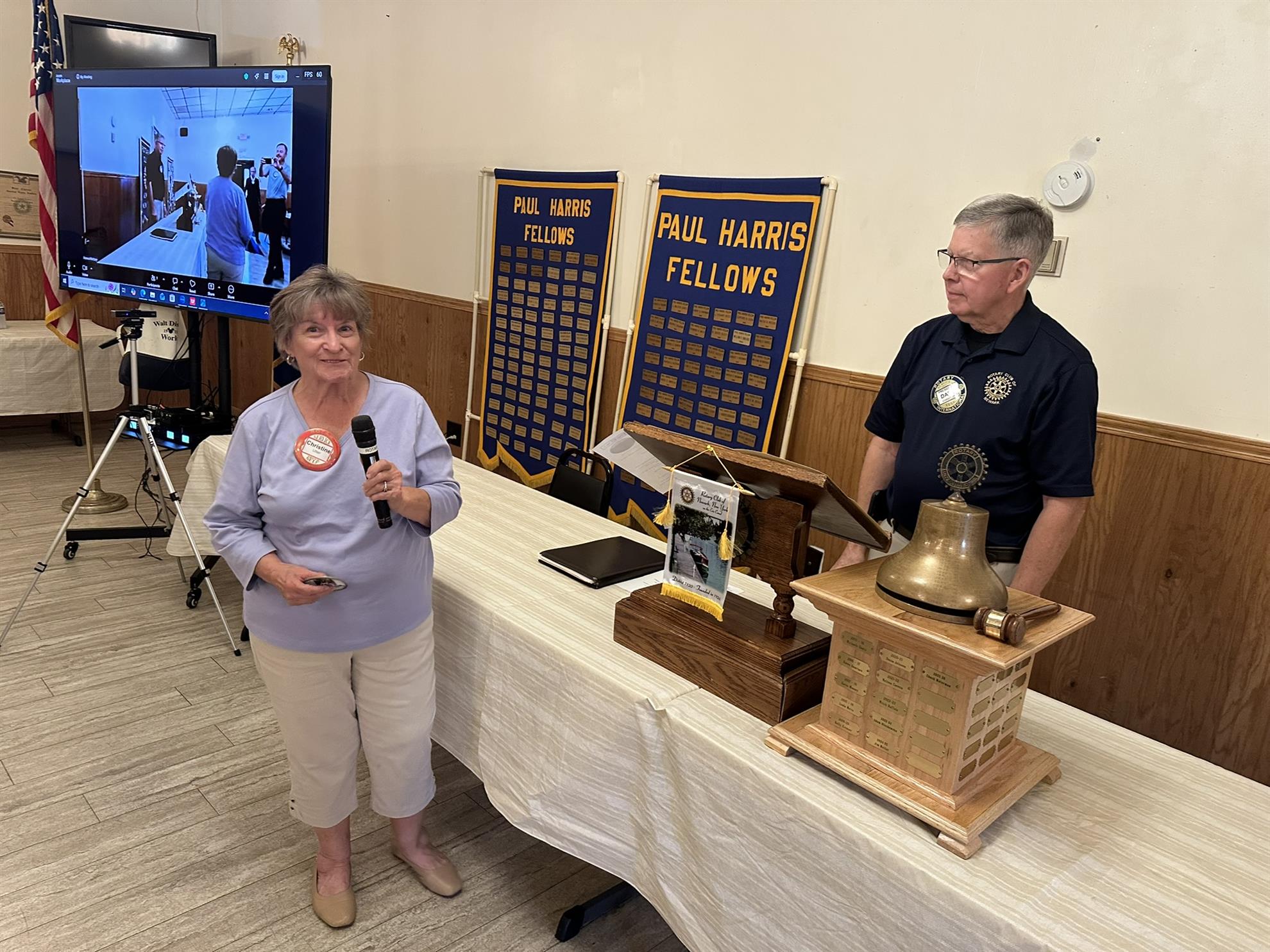
Christine received her blue badge - and in near record time!
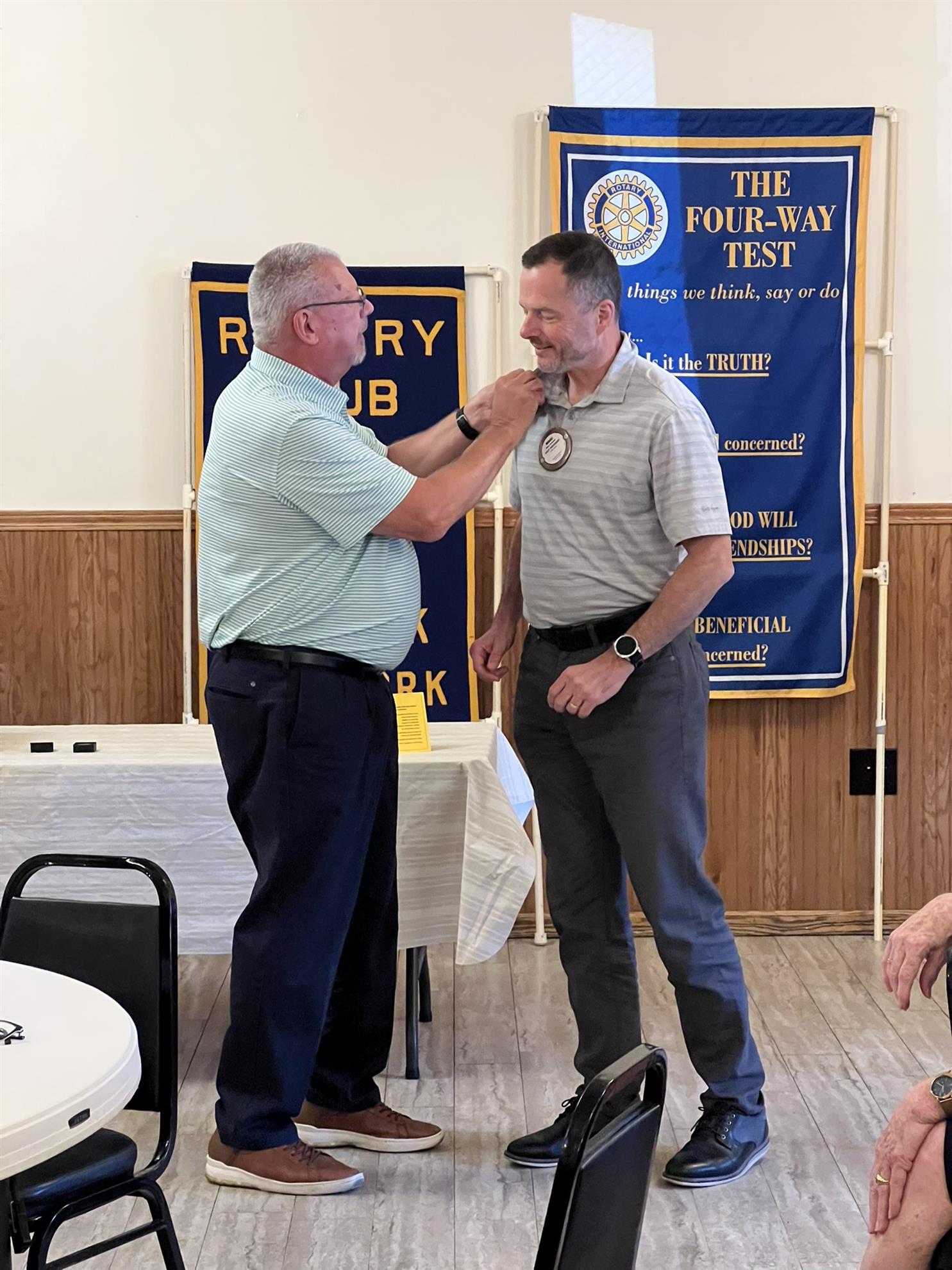
Marc was recognized as a Paul Harris +5 recipient.